ABOUT THE GAME
Jumping Clones game overview
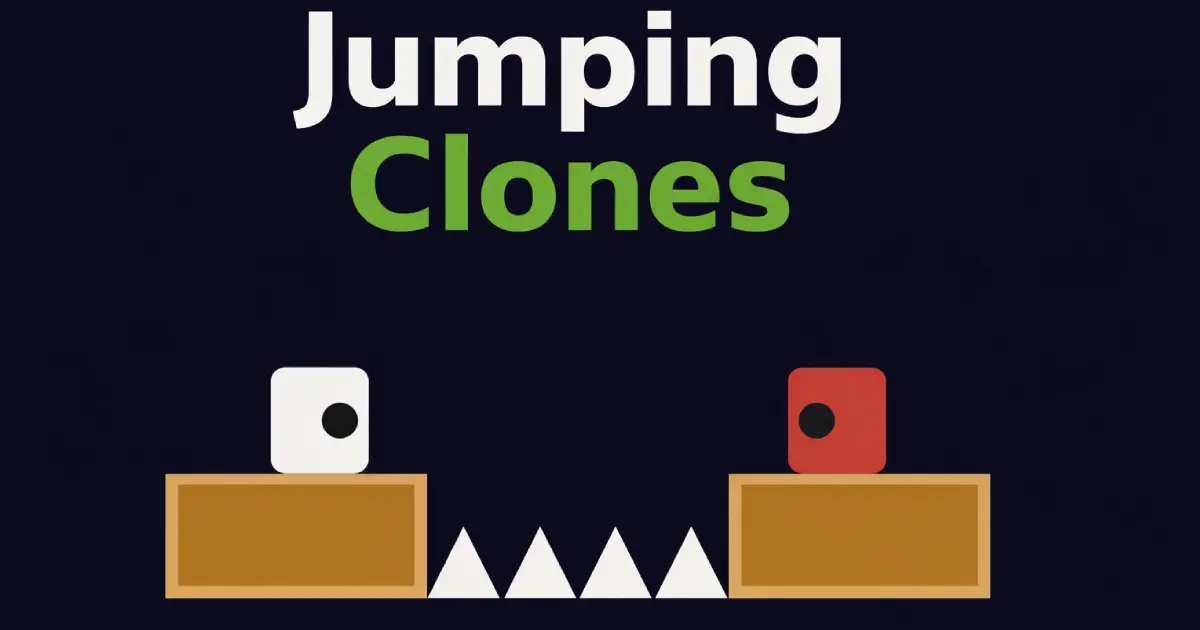
Jumping Clones is a platform puzzle in which one input controls several characters at once. The clones may begin on different platforms, face different obstacles, or need to reach separate exits. Pressing a direction moves the whole group, so a safe jump for one clone can send another toward a wall, gap, or hazard. The objective is not simply to move quickly through the level. You must understand how the same action affects every starting position and find a shared sequence that keeps the entire group alive. That synchronized design makes familiar platform controls feel like a logic problem.
Core gameplay
Each stage is easiest to understand when you compare the clones rather than watching only one character. Platforms can limit movement and help hold one clone in place while another travels, turning walls into useful tools. A jump may have different results depending on the space above each clone or the distance to the next ledge. Some sections require deliberate alignment before the group can advance together. Checkpoints and exits often reveal the intended order: one clone reaches a safe pocket first, then the remaining movement is used to position the others without pulling the protected clone back into danger.
Strategy and useful tips
Start by identifying the clone with the least freedom. A character beside a gap or under a low ceiling usually determines which move must happen first. Test how walls can absorb movement; if one clone is pressed safely against a barrier, repeated inputs can reposition another without changing the first clone’s location. Before jumping, compare both the takeoff and landing tiles for every character. Avoid holding a direction longer than necessary, since extra momentum can destroy a carefully synchronized setup. When a solution fails, note which clone became unsafe first and rebuild the sequence around protecting that position.
Why play Jumping Clones?
The pleasure of Jumping Clones comes from turning apparent contradictions into one elegant movement sequence. A level may look impossible because the characters need to travel in opposite directions, but the environment provides a wall, ledge, or timing difference that separates their outcomes. Solutions feel earned because they combine platforming execution with observation. The levels are compact enough for quick experimentation, and restarting encourages players to test an idea immediately. It is a strong choice for anyone who likes puzzle platformers that ask for planning without abandoning responsive movement.